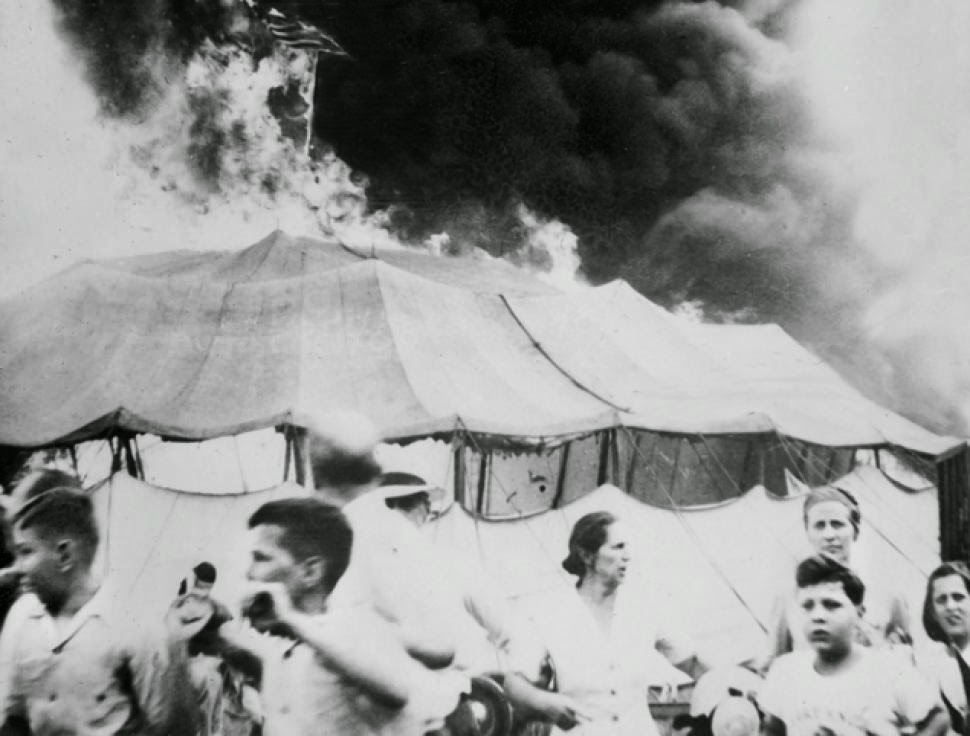
Judith survived the “Great” circus fire of July 6, 1944 — she talks about that as well as her childhood growing up in rural dairy farming area (Bloomfield Ct), her neighbors, and even Mr. Webster the local butcher.
Mike talks about the economic value of information and why the freedom of information should be valued by a free society. Mike talks with Harry Hawk about his previous role as the CTO and VP at The Creative Commons.
Education in America is focused on how many days you spend in the classroom, and the grades you are assessed. Education in America rarely focuses on mastering new skills and quantified evidence of learning. If you show up for every class and you get a passing grade, you have passed the course, even if you haven’t mastered everything covered in the course.
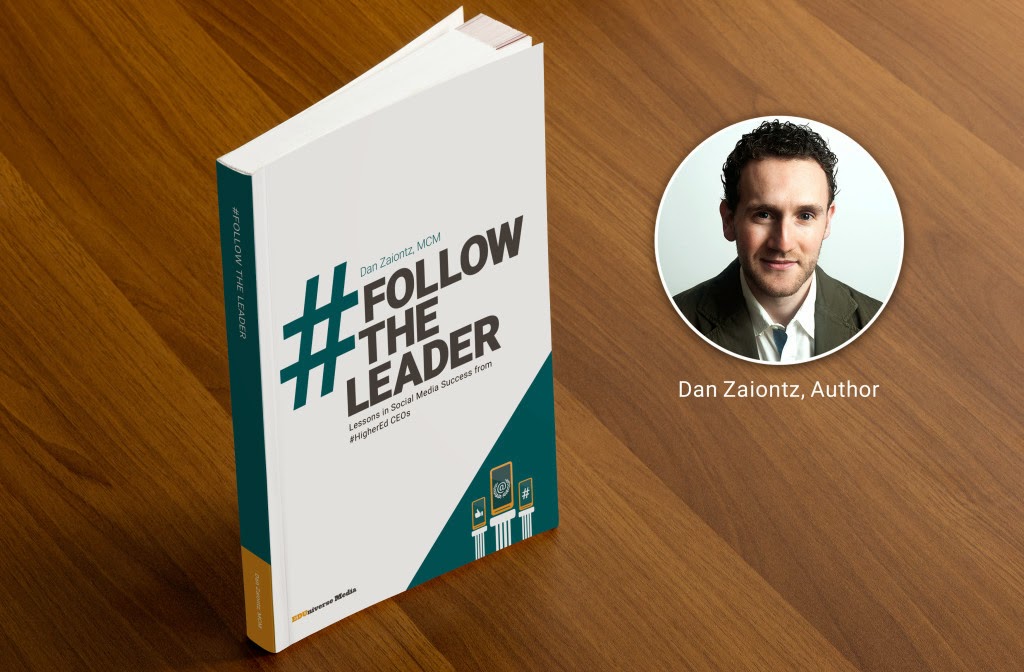
Dan Zaiontz, a faculty member of Seneca College, started researching senior academic usage of social media while completing his Master’s degree in Communications (MCM). That research is now part of a book called #FollowTheLeader, which is being published by M. Stoner; January 20, 2015 is the publication date.
Everyone knows sex & sexy sells. Example: decades of posters, calendars and advertising have often included photos and illustrations of younger, attractive often busty women. Angus Malcolm turned that notion on it’s head by releasing photos of fit, college-age men.
Listen to my Interview with Angus from July 2014; this is the “raw and uncut edition.”
Learn how Angus Malcolm and the Naked Rowers have used nudity and social media to engage, influence, and tell a very unique story about sports and inclusion while raising “nearly £100,000” for Sport Allies.
The male, mostly straight rowing crew at the University of Warwick have turned this traditional on it’s head. First to raise funds to keep their “cash strapped” club afloat, but now to increasingly raise money to fight off homophobia in sports. The first time Angus Malcolm uploaded images from one of their shoots “within 24 hours it generated over 36k downloads.” A “making of” trailer from their 2014 effort generated more millions of downloads from at least “1.5 million unique viewers.” Angus is the photographer on all of the Warwick Rowers photos below.
I’ve helped sell more than 100, 000 burgers and I’ve cooked them 5x at the James Beard House. I also won the 2008 Burger Battle of the Boroughs. This is my story about my love affair with the hamburger. I’ve decided to start to tell this story because on Jan 17th 2015 I’ll be cooking a burger pop-up in Brooklyn. If you are reading this before that date, you can buy some tickets and taste my burgers –> Jan 17, 2015 Tickets.
This was my first episode, “a test” to see if my production chain was working..
I was joined by Ken to talk about society and marketing; topics we used to blog about (here). This was a test of how well we could record together over Skype, testing out Ken’s Microphone, and of course getting used to speaking to each other while recording everything we said. This is episode is the edited copy which has a running time of about 27 minutes.
Talking About Everything, a podcast with Harry Hawk offers a wide range of interviews, rants, discussions and more. Please use this promo if you would like to help me promote the show. Please consider subscribing on iTunes and giving us an honest review.
Purely as part of my academic research, I have been eating a lot more fast food, checking out limited time only offers and the restaurants’ service.
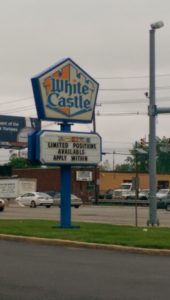
For breakfast the other day, I ordered fried egg and burger sliders with caramelized onions and no cheese at White Castle. The receipt was correct, but the order had cheese. At McDonalds, I ordered a Sweet Chili Chicken wrap but received a Ranch Chicken Wrap. The receipt was correct, but it took 20 minutes to place and receive my order at a store that was well staffed with only a few in-store customers — apparently employees were focused on the busy drive-thru. Order complexity, wait times, speed, and accuracy are among the many issues the restaurant industry faces.
The whole topic of in-store engagement and alternative payment systems is heating up. Let’s face it — nearly everyone who visits quick serve restaurants has a mobile device on them. These restaurants (and grocery stores) have similar high traffic and low margins and both seek customer loyalty. Of the two, only grocery stores have succeeded with loyalty programs. There is hope that personalized, socialized, and mobile technology will change the game for quick serve restaurants and prove to be a winning tactic.
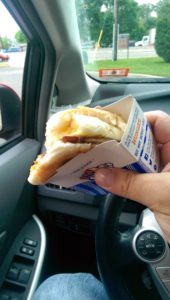
Breakfast Slider from White Castle
Fast Food Forced Errors
Online ordering and payment reduce errors, increase transaction speed, and narrow casts notifications (an easy way to tell you an order is ready). Labor-saving efforts normally require consumer and staff education that increases when the change is complex. Apps facilitate labor reduction and eliminate many education requirements while cloaking complexity with a well-mannered user interface. Companies like McDonalds, Burger King, and Subway are investigating these technologies; at Five Guys, consumers can order from the counter, a website, or mobile app.
Mobile payments and ordering will benefit chain owners, but I am rather sure this offers few benefits to the consumer. Mobile ordering is not going to solve the problem of correctly entered orders served incorrectly. Then there is the willingness and time needed to set up a wallet. Up to three times more millennials are embracing mobile payment over Gen X and Boomers, according to at least one report. Will merchants accept universal payment systems? It might be cheaper if each chain has its own payment system. Private wallets lock-in customers, in the same way JC Penny won’t accept a Macy’s charge card.
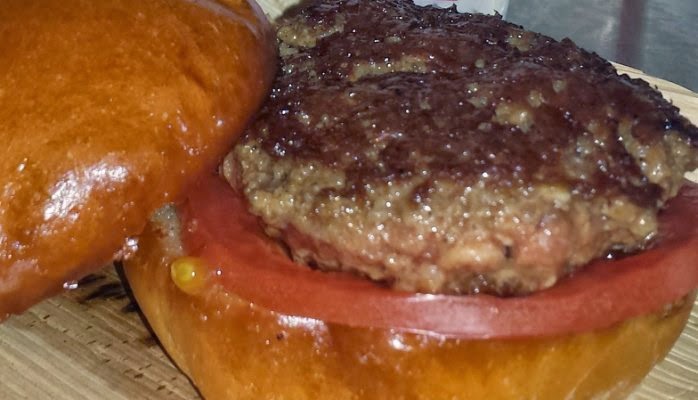
A Burger from Burger Shakes & Fries Greenwich CT.
Waiting
If I am waiting in a line, I’m holding my phone. If I had a e-wallet on my phone, I would rather use it than put away my phone, find my actual wallet, and fish out my debit card or cash. Not having to put away a phone and then find a physical wallet might be the only consumer benefit. But will consumers embrace mobile wallets? Seventy percent of GenY have not done this yet. Long term, consumer benefits (beyond speed and convenience) might include the ability for parents to pre-approve spending for particular items at particular times and locations, or constrain personal or family member spending to pre-set budgets.
For the restaurants themselves, payment from an application or mobile device opens the door to a more direct and intimate relationship with customers, potentially driving loyalty and retention. If McDonalds, Wendy’s, Five Guys, Subway, and other chains start accepting universal wallets, that could drive setup and create an ecosystem for the benefit of other merchants. Quick-serve restaurants will benefit — if the trend mirrors credit cards — as consumers buy more often, buy larger quantities, or buy more profitable items. Businesses will also benefit if transaction fees are lower, as higher fees would be counter productive. Let’s assume they don’t have to give Google, Amazon, Apple, Sprint, AT&T, or Verizon a cut of the transaction.
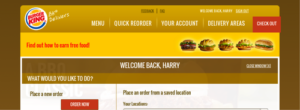
With few intrinsic benefits, perhaps merchants will offer discounts and free food as an enticement. Burger King’s online delivery system attempts to do this by building a loyalty program into the online ordering process.The loyalty program and the relationship that comes with it may well be worth the price of admission for merchants and consumers. If restaurants must offer discounts and free food to jumpstart mobile and online ordering, let’s hope it pays off for both parties.
Consumer Choice
Consumers won’t voluntarily embrace something that gives them little or no benefit. How much free food and coupons will habituate consumers to this new experience? Chipotle is adding games. Is that an incentive or a distraction? Only time will tell.